SUAR - Mobile Safety System
A mobile application for reporting, safety monitoring, and emergency assistance on campus.
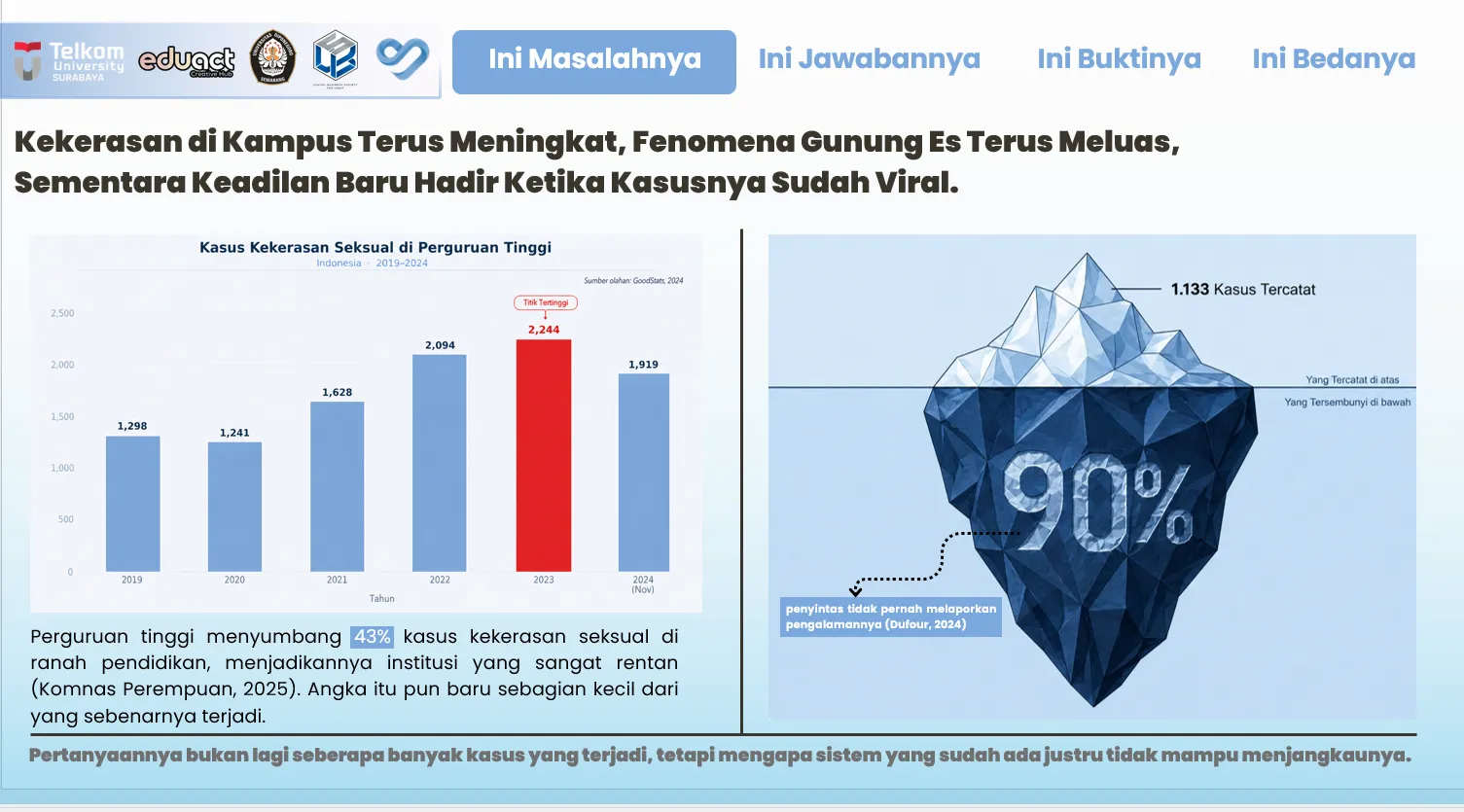
The Problem
Providing a reporting form does not automatically make it easier for someone to seek help.
The research behind SUAR pointed to stigma, unequal power relationships, distrust of internal reporting mechanisms, and uncertainty about what happens after a report is made. Disclosure, reporting, counseling, emergency assistance, and case monitoring can also happen through separate channels.
What We Changed
We did not make formal reporting the only way to start using the service. Early disclosure, reporting, assistance, and emergency response involve fundamentally different user needs.
Assumes users are immediately ready to disclose all details and file formal documentation.
The Part I Worked On
My primary focus centered around critical user states — deciding what the system should do when the user's situation changes.
Emergency Response
SOS activation flow, short cancel timer, location broadcast, responder alert, & live tracking.
AI Integration
TemanKu conversation logic, intent scoring, critical keyword detection, & consent flow.
Safety Flow
Pantau Aku check-in intervals & emergency escalation trigger on missed confirmation.
Core Setup & Backend
Architecture setup, formal report backend, chat, emergency requests, & live tracking services.
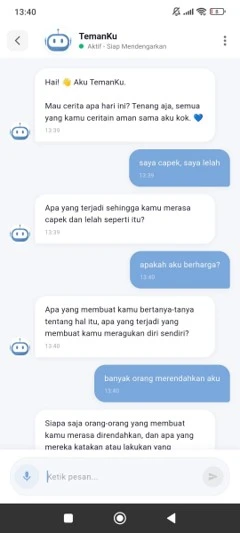
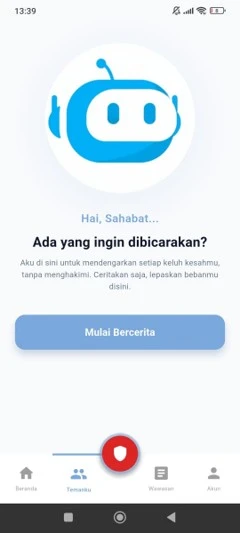
TemanKu - Initial Conversation
Someone may want to talk about what happened without immediately turning that conversation into a formal report. TemanKu gives them that first step.
I worked on the AI integration and conversation logic, including intent scoring, critical keyword detection, consent flow, and the transition toward reporting.
The model does not decide whether a case is valid, provide a diagnosis, or determine handling actions. It supports the conversation and points users toward available services. Professional decisions remain strictly with authorized staff.
Pantau Aku - Safety Check-in
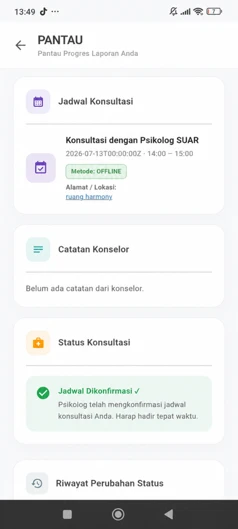
Pantau Aku covers situations that may not require SOS yet, but still give someone a reason to be more careful about their safety.
The user chooses a check-in interval and confirms that they are safe while monitoring is active. The flow also accounts for the possibility that an expected confirmation never arrives.
My contribution focused on how that condition connects with the emergency path, so safety does not depend solely on manual SOS button presses.
SOS - Emergency Assistance
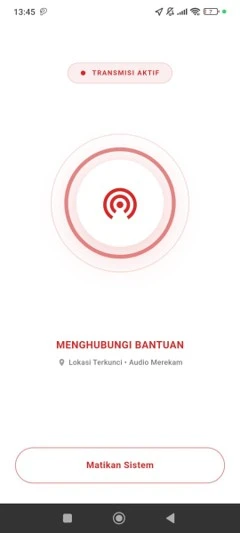
SOS is separate from the normal reporting process. Someone asking for immediate help should not have to complete several reporting steps first.
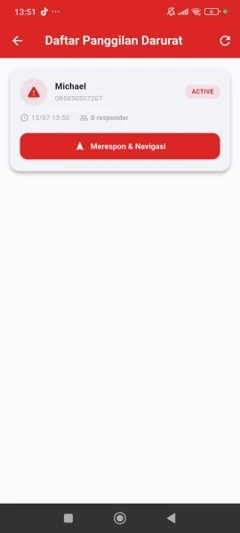
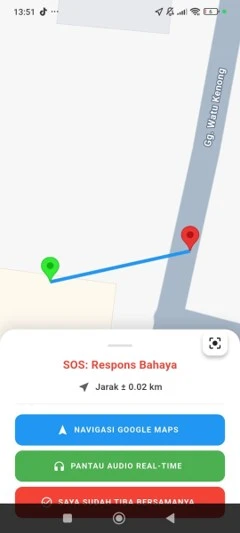
The flow I worked on covers SOS activation, a short cancellation period to prevent accidental triggers, location transmission, responder notification, and live tracking during the incident.
How They Connect
TemanKu, Pantau Aku, and SOS are parts of the same user journey. Each part answers a different user situation while remaining connected to the broader system.
AI does not decide the case
We could have given TemanKu more authority and made the AI part of the project look more advanced. I do not think that would have made it better. A conversation about sexual violence carries consequences that are too serious to treat model output as professional judgment.
- • Support initial conversation with empathy
- • Parse intent & detect critical keywords
- • Present available campus service options
- • Guide user toward consent & formal reporting
- • Case validation and truth verification
- • Professional psychological assessment
- • Institutional investigation & sanctions
- • Official Satgas protection measures
What We Delivered
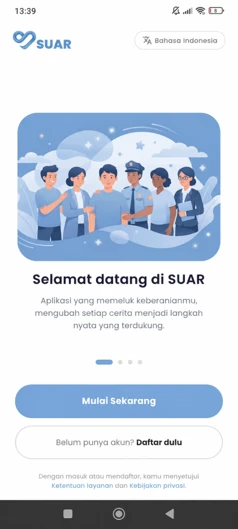
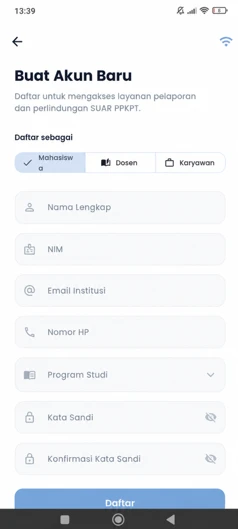
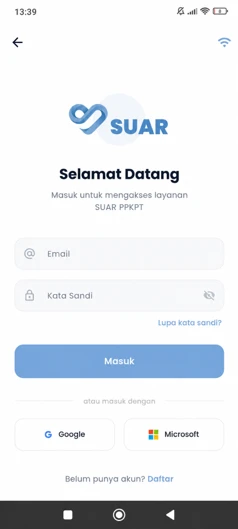
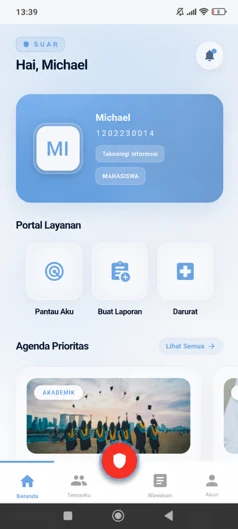
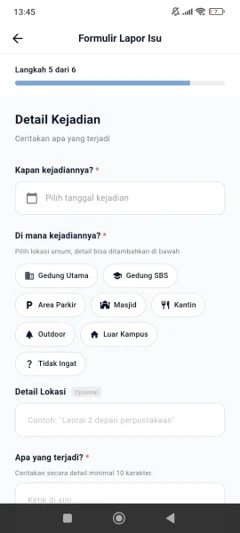
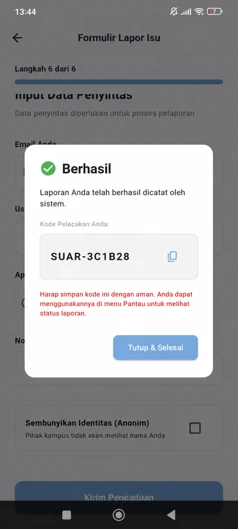
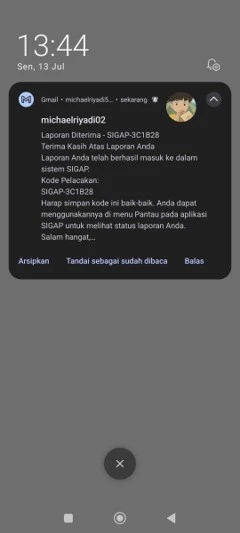
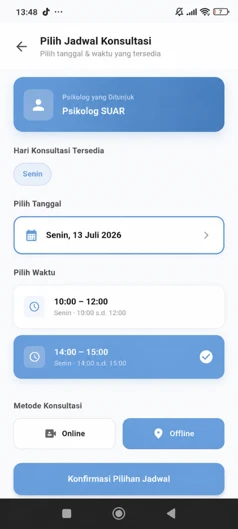
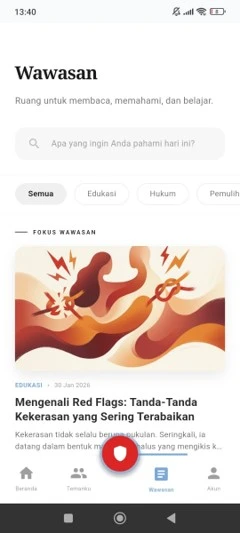
SUAR reached the mobile prototype stage, connecting early conversation, safety monitoring, emergency assistance, reporting, and case monitoring in one cohesive mobile interface.
Desktop Views
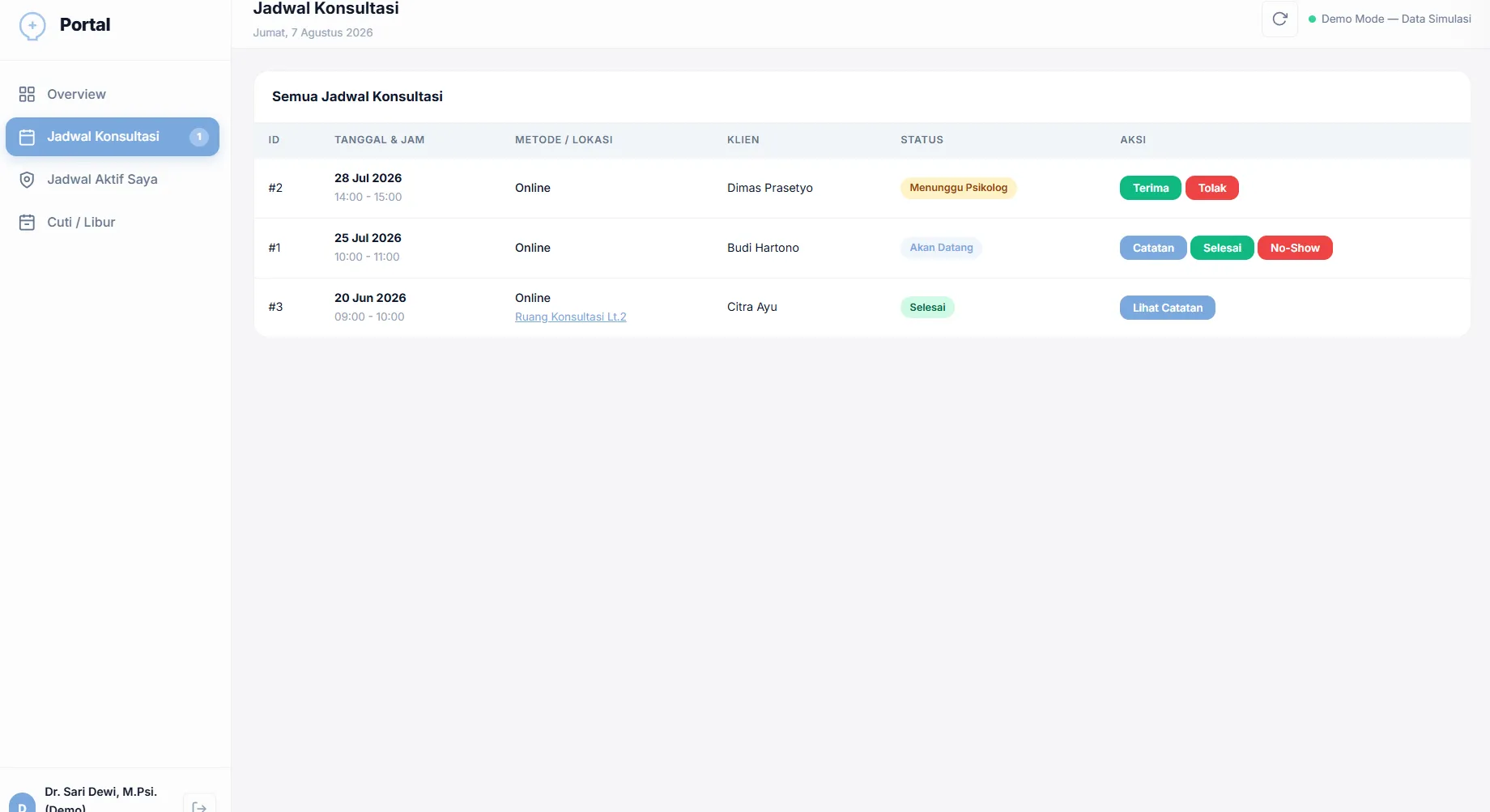
Psychologist Dashboard
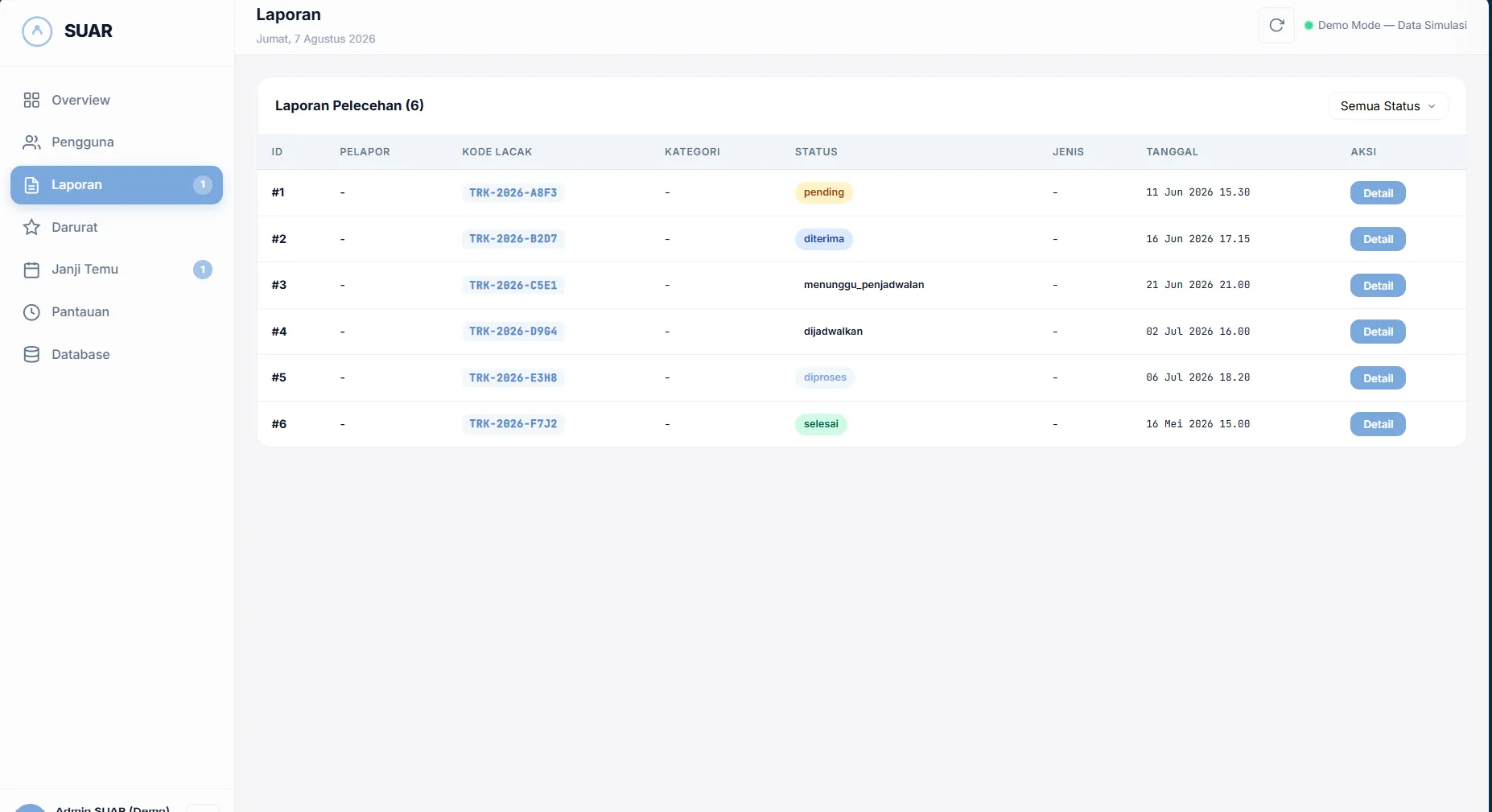
Satgas Admin Panel
Mobile Application Views
What We Cannot Claim Yet
SUAR has not been deployed as an active campus protection service. That means we cannot claim that it increases reporting rates, improves real emergency response time, or reduces sexual violence.
Validation priorities for future phases: Field response time testing, Pantau Aku check-in reliability, SOS dispatch resolution, data consistency under peak load, and UX pilot evaluations.
What I Learned
This project made me think more about system behavior than individual feature behavior. An SOS button itself is easy to explain. The harder questions sit around it:
What happens before someone feels the need to use it?
What happens after the request leaves the device?
What should the flow do when the user stops responding?
Which decisions should never belong to the system in the first place?
Learning to design for system behavior under critical conditions became the most valuable outcome of this project.
Technology
Key Outcomes
More Than a Reporting Form
Flexible entry points (talk, monitor, SOS) instead of forcing immediate formal disclosure.
Safety Without Relying Only on SOS
Automatic emergency escalation when safety check-in confirmation is missed.
AI With a Clear Limit
TemanKu supports conversation and service navigation. Case decisions remain with humans.